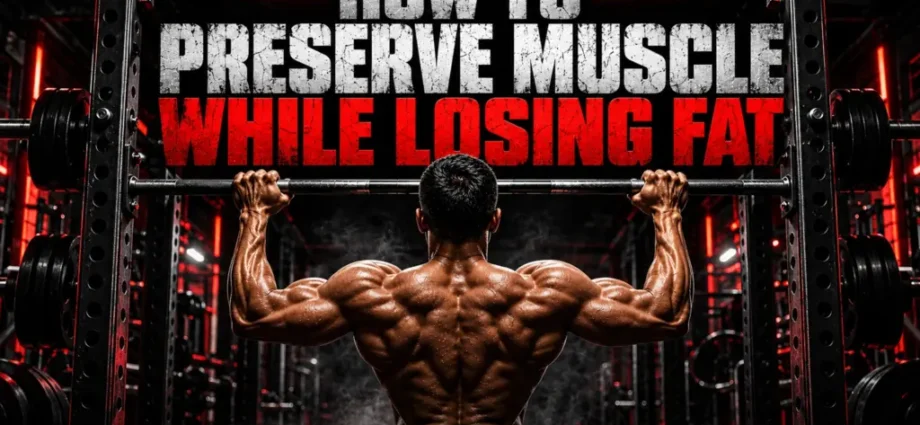
How to Preserve Muscle While Losing Fat
Losing body fat while maintaining muscle is one of the biggest challenges during a cutting phase. A calorie deficit can reduce body weight, but aggressive dieting may also increase muscle loss. The goal is to lose fat gradually while giving your body enough training, nutrition, and recovery support to maintain lean mass.
Create a Moderate Calorie Deficit
Fat loss requires consuming fewer calories than your body uses. However, an overly aggressive deficit can make it harder to maintain muscle and training performance.
A moderate calorie deficit is generally easier to sustain and allows you to continue training effectively while gradually reducing body fat.
Keep Protein Intake High
Protein provides the amino acids needed for muscle maintenance and repair. Getting enough protein throughout the day can help support lean mass while calories are reduced.
Include protein-rich foods such as lean meats, fish, eggs, dairy products, legumes, and other suitable sources in your diet.
Continue Strength Training
Strength training provides an important signal for your body to maintain muscle. Continue performing resistance exercises during a cutting phase rather than relying only on cardio.
Maintaining your strength as much as possible can be a useful indicator that your training and nutrition are supporting muscle retention.
Avoid Excessive Cardio
Cardio can support calorie expenditure and cardiovascular fitness, but doing excessive amounts may add unnecessary fatigue.
Use cardio as a supporting tool rather than making it the entire focus of your fat-loss strategy. Your overall workload should remain manageable.
Keep Training Intensity Appropriate
There is often no need to completely change your resistance-training routine during fat loss. Continue challenging your muscles while adjusting volume when necessary.
If recovery becomes more difficult as calories decrease, reducing unnecessary training volume can help you maintain performance without accumulating excessive fatigue.
Prioritize Carbohydrates Around Training
Carbohydrates provide energy for demanding workouts. Including them around training can help support performance and make intense sessions more productive.
The appropriate amount depends on your overall calorie needs, activity level, and individual goals.
Get Enough Dietary Fat
Dietary fat plays important roles in overall nutrition and helps make meals more satisfying. Extremely low-fat diets can make it harder to maintain a balanced eating pattern.
Include reasonable amounts of foods such as nuts, seeds, eggs, fatty fish, olive oil, and other nutrient-rich sources.
Prioritize Recovery
Muscle preservation depends on more than training and nutrition. Sleep and recovery are also important parts of maintaining performance during a calorie deficit.
Poor recovery can reduce training quality and make an already demanding cutting phase feel even harder.
Track Your Progress Properly
The scale is useful, but it should not be your only measurement. Track body measurements, progress photos, gym performance, and how your clothes fit.
Looking at several indicators can give you a better understanding of whether you are losing fat while maintaining lean mass.
Avoid Extremely Rapid Weight Loss
Rapid changes on the scale can be tempting, especially when starting a cutting phase. However, losing weight too quickly can make muscle retention more difficult.
A gradual approach gives you more time to maintain training performance and establish sustainable eating habits.
Be Patient During the Process
Fat loss takes time, and body composition changes are not always obvious from week to week. Daily fluctuations in water, food intake, and other factors can affect body weight.
Focus on longer-term trends rather than reacting to every change on the scale.
Conclusion
Preserving muscle while losing fat requires a balanced approach. A moderate calorie deficit, sufficient protein, continued strength training, appropriate cardio, and proper recovery can all support better body composition results.
The goal of a successful cut is not simply to become lighter. It is to reduce body fat while maintaining as much strength and lean muscle as possible.